Case Study · E-Commerce / No-Code
Scaling Scalapay's shopping directory with Webflow and Sanity
Scalapay's merchant directory outgrew Webflow CMS. We kept Webflow for marketing speed, moved directory data into a headless CMS, and shipped a discovery UX that stayed fast at thousands of listings.
- of listings
- 1000sof listings
- countries
- 8countries
- phased delivery
- 3phased delivery
- for web + mobile
- 1 CMSfor web + mobile
The problem
The directory became the product, and Webflow CMS couldn't keep up
Scalapay's marketing team loved Webflow because they could publish changes in minutes. It worked fine for a small set of listings. Then the directory became the product.
Thousands of merchants across eight countries, constant updates, and a marketing team that needed to ship pages quickly without turning “content” into ops work. A few failure modes showed up as the directory grew:
- The CMS structure wasn't built for a directory that behaves like a product
- Filtering and discovery started to feel slow and brittle
- Merchant content had to be maintained twice, for web and the mobile app, creating drift and duplicated work
They didn't have a “website problem.” They had a content system problem.
The approach
Ship in phases. Keep Webflow.
We didn't rip everything out. Improvements shipped in phases so the directory got better immediately, and the architecture stayed sane throughout.
- Phase 01
Real-time filtering
Replaced Webflow's native filtering with custom code. Discovery feels instant: no page reload, no lag as inventory grows.
- Phase 02
Predictive search
Layered Algolia for typo-tolerant, instant results as the merchant catalogue expanded.
- Phase 03
Headless CMS
Directory data moved into Sanity, connected to Webflow via API. One dataset for web and mobile.
- Phase 04
Webflow stays
Marketing kept their Webflow workflow for pages and campaigns. No migration, no retraining.
Phase 1
Real-time filtering that actually feels instant
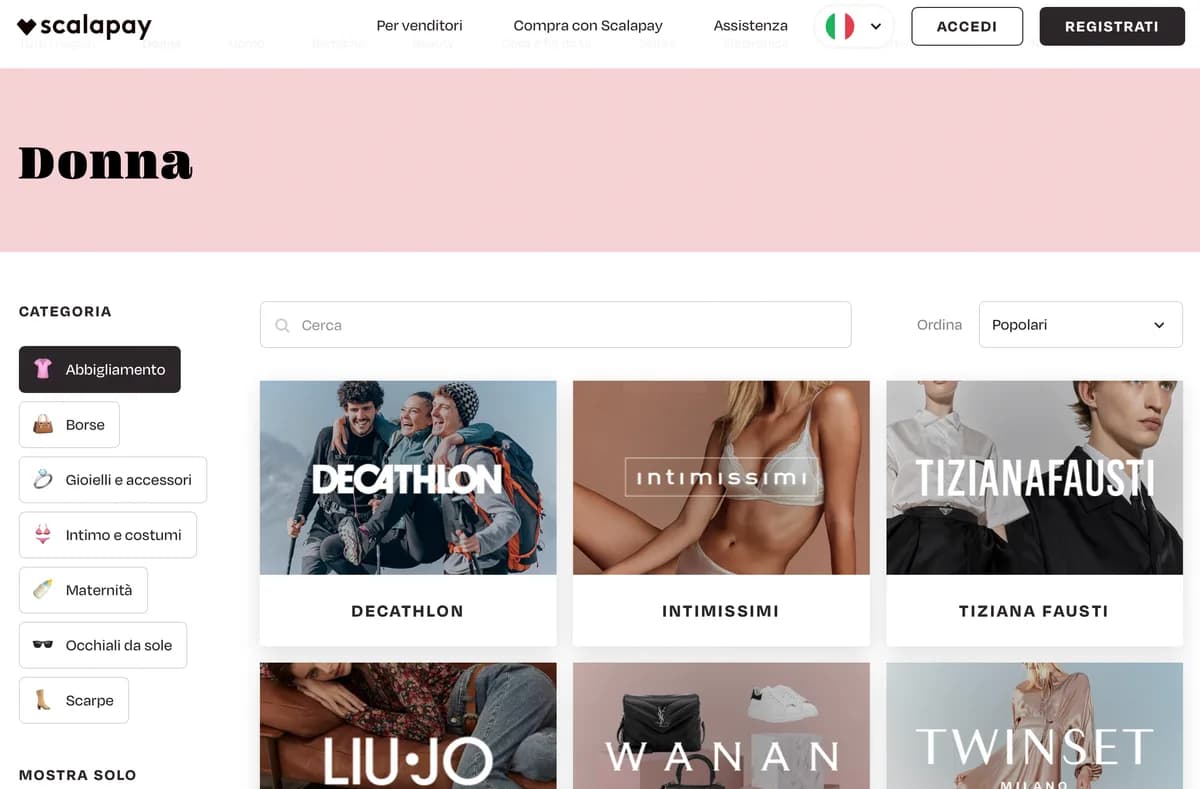
Webflow's native filtering worked for small datasets, but it wasn't the experience you want when discovery is the core job. We replaced the native filtering behavior with custom code: emoji-based category pills that filter the directory in real time without a page reload.
- 1Emoji category pills make filtering tactile and visually distinct from search.
- 2Results update instantly: no reload, no spinner, no lag.
- 3Built on Webflow's existing structure, with no CMS migration needed at this stage.
Phase 2
Predictive search with Algolia
Once filtering was solid, search became the next constraint. As merchant count grew, users needed to find specific brands without scrolling. We added Algolia for typo-tolerant, predictive results, so the directory stayed usable as inventory scaled.
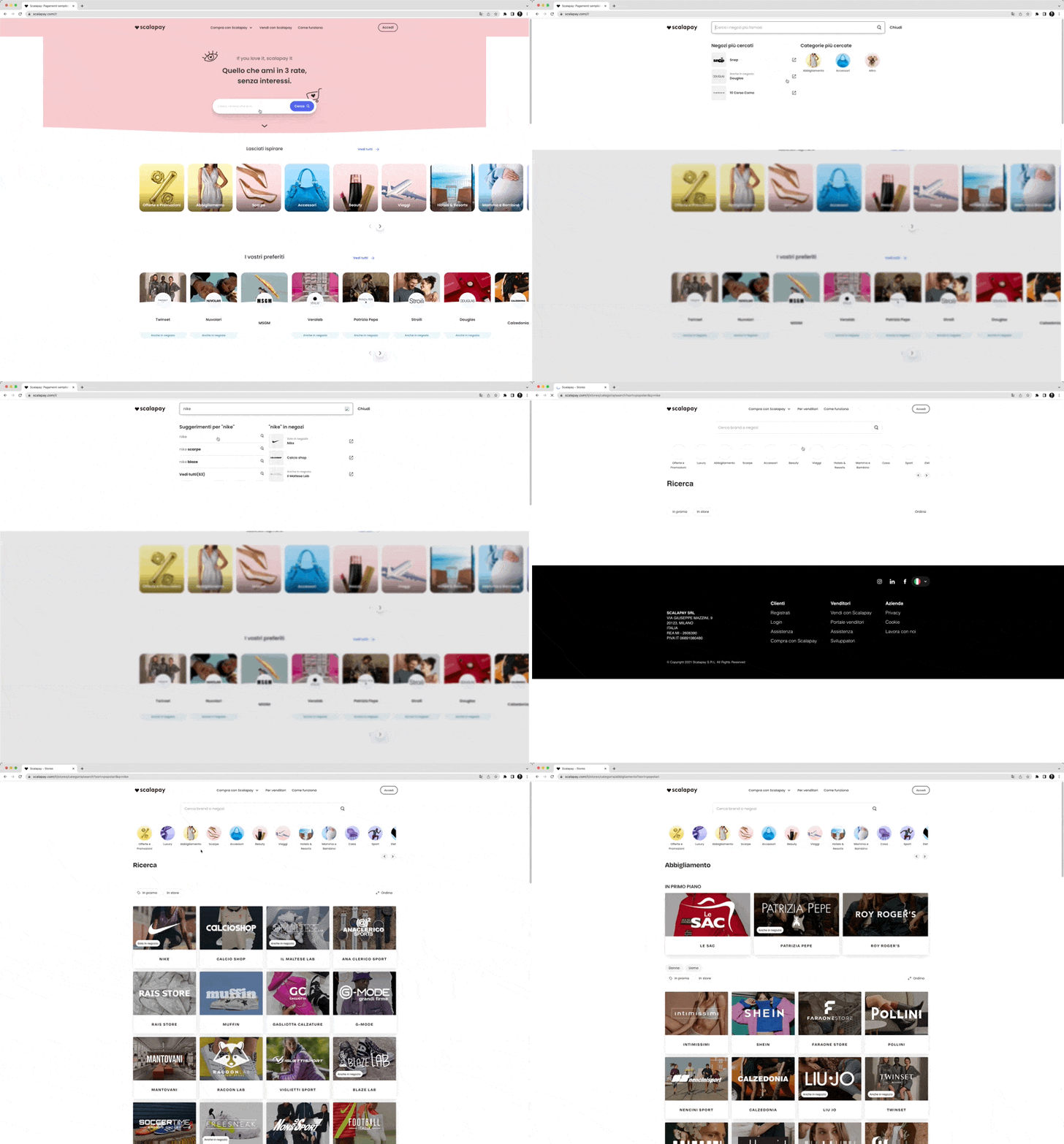
- 1Results appear as you type. No submit button, no wait.
- 2Typo-tolerant matching means users find brands even with imperfect spelling.
- 3Algolia's index updates automatically as new merchants are added to the CMS.
Phase 3
Headless CMS: one source of truth for web and mobile
This is where the system became durable. We moved directory data into Sanity so Scalapay had a scalable source of truth that could also power the mobile app. Then we connected Sanity to Webflow via API, so the marketing team could keep using Webflow for pages and campaigns, without stuffing a product-grade directory into a website CMS.
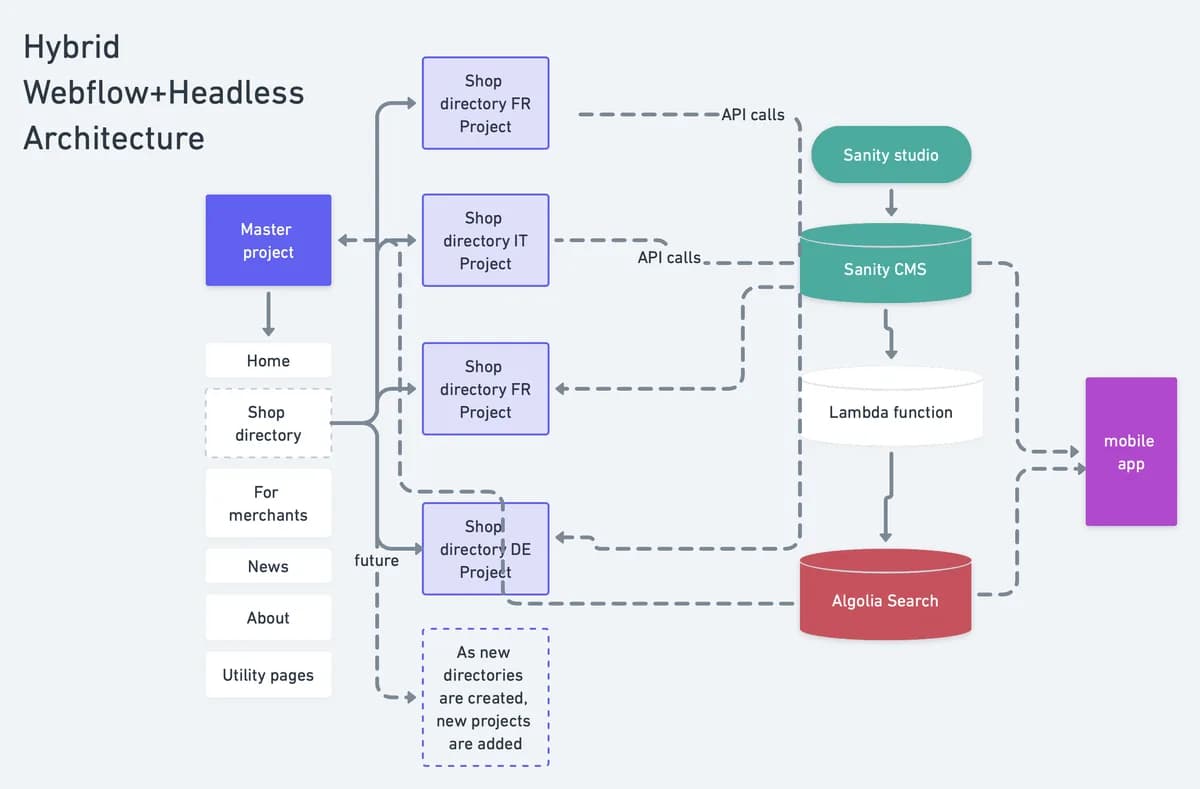
- 1Sanity holds all merchant data: structured, scalable, and API-first.
- 2Webflow pulls from the API, so marketing keeps their workflow with no migration.
- 3The mobile app pulls from the same Sanity source. No more content duplication.
Architecture
What we shipped
Four components, each responsible for exactly one job. The key decision was keeping each tool in its lane.
- Component 01
Sanity
Source of truth for merchant data. Structured, scalable, and reusable across web and mobile. One update propagates everywhere.
- Component 02
Webflow
Presentation layer for the marketing site. Fast page building for campaigns and landing pages, without the CMS weight of the full directory.
- Component 03
API Integration
The bridge that keeps the directory fresh. Sanity data flows to Webflow without manual copy-paste or duplication.
- Component 04
Algolia + Custom UX
The discovery layer. Typo-tolerant search combined with emoji-based filtering so the directory feels like a product, not a list.
Outcome
What changed for Scalapay
The underlying shift
Scalapay didn't need a new website. They needed to separate “content that belongs to a product” from “content that belongs to marketing.” Once that line was clear, the architecture followed. Sanity handles the product data. Webflow handles the marketing pages. The API keeps them in sync. Each tool does what it's actually good at.
For more on where Webflow's own tooling is headed, read Webflow MCP 2.0: game changing release
What Scalapay said
“Eldur Studio helped us stretch Webflow's limits and has proven to be a fast and trustworthy partner. The quality of the work has been consistently great, the team is collaborative and has often helped us take our idea to the next level.”
Next step
Building a directory or a content-heavy product?
Most teams start with a First Agent, so you see real output before committing to a bigger system.
Next case study
Lead Enrichment Agent with Explorium and Notion